
Campaigns • 6 min read
The January Benefits Reset: Why November Is Your Biggest Booking Month
Dental and physio benefits reset January 1 in most employer plans. Clinics that market to this expiration window in November and December consistently see a 20–30% lift in December bookings.
The window
For most employer benefit plans, unused dental and paramedical coverage expires on December 31. It does not roll over. The patient who had $1,500 in dental coverage and used $400 has, in effect, lost $1,100 if they do not book before year-end.
Patients respond to deadlines. The clinics that send four to six reminder messages between November 1 and December 20 consistently outperform clinics that wait for January walk-ins - typically a 20–30% lift in December bookings, in what would otherwise be one of the slowest stretches of the year.
This is the sharpest edge of the broader unused-benefits opportunity: the demand already exists and the deadline is real. The campaign's job is only to make both visible.
A 4-message campaign that works
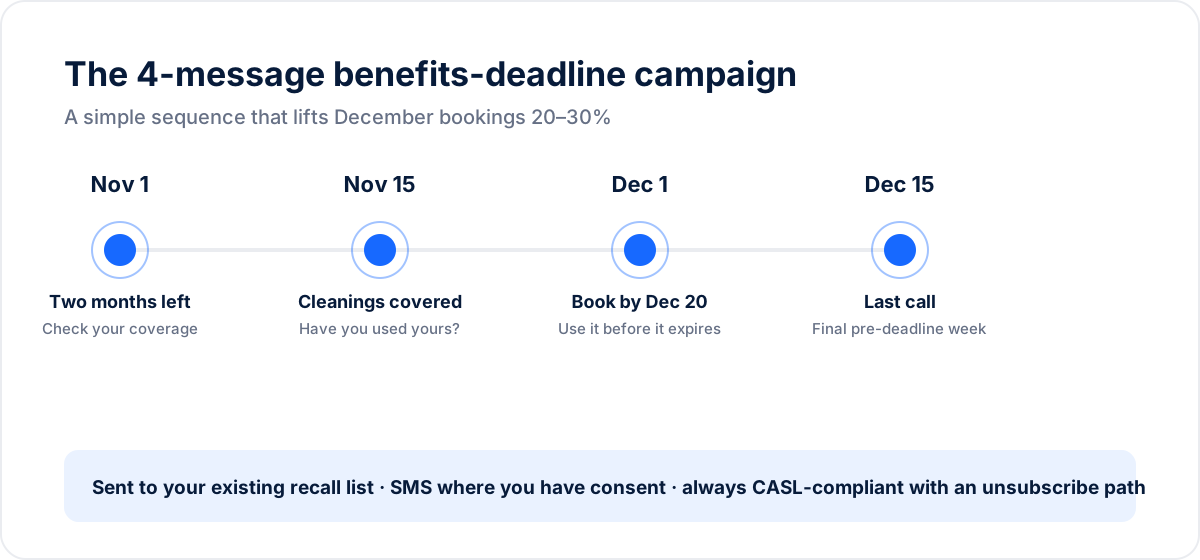
Message 1 (Nov 1): “Two months until your benefits reset. Check your remaining coverage.” Message 2 (Nov 15): “Most plans cover 100% of cleanings. Have you used yours this year?” Message 3 (Dec 1): “We have appointments available this month. Book before Dec 20 to use this year's benefits before they expire.” Message 4 (Dec 15): “Last call - Dec 20 is our final week of guaranteed pre-deadline appointments.”
Personalize where your practice software allows it: last-visit date (“it's been 8 months since your last cleaning”) and, where you verify coverage, remaining-balance estimates. Specific numbers outperform generic urgency in every test we have seen.
Keep each message under 320 characters for SMS. One idea per message, one link, one deadline.
Channel rules: SMS, email, and CASL
Send by SMS where you have consent - open and response rates are several multiples of email - and by email otherwise. In Canada, both channels fall under CASL: an existing patient relationship generally provides implied consent for relevant messages, but every message needs identification and a working unsubscribe mechanism, and consent records should be kept.
Do not buy lists, and do not message lapsed contacts beyond CASL's implied-consent windows. The campaign is aimed at your existing recall list, which is both the compliant audience and the one that converts.
Support the campaign on your website and profile
Add a “Use Your Benefits Before They Expire” banner or page to your site from mid-October, with a 60-second booking path - patients acting on a deadline reminder should never land on a generic homepage. Mirror the message on your Google Business Profile with weekly posts through the window; benefits-deadline posts are among the highest-engagement GBP content clinics can run.
If you run any paid search, the November–December window is the highest-ROI time to bid on “dentist direct billing [neighbourhood]” terms - the searcher's intent and the deadline are already aligned.
What this looks like in numbers
A mid-sized GTA dental practice with 1,200 active patients running this campaign typically books 40 to 80 additional appointments in November and December. At an average $200 revenue per visit, that is $8,000 to $16,000 of additional revenue in a window that would otherwise be slow - from a campaign whose hard cost is a few hours of setup and pennies per SMS.
It is also the single highest-ROI marketing activity a clinic can run all year. The patient list is already warm, the deadline is real, and the message is a service to the patient rather than a promotion.
Operational notes for the December rush
Plan capacity before you send: open additional hygiene blocks in the first three weeks of December, and hold the final week before the holidays for campaign responders. A campaign that produces calls your front desk cannot schedule converts urgency into frustration.
Pre-verify benefits for responders the same day they book - “you have $1,100 remaining and this visit will use about $280 of it” is the confirmation message that prevents no-shows. And capture reviews in the same window: December's higher visit volume is the natural moment to run your review-request system at full tilt.
And then flip the message in January
On January 1, the deadline message dies - and a fresh one is born: “your benefits just reset.” January-to-March is traditionally slow for clinics, and “start the year with a fresh $1,500 of coverage” fills it. Same list, same channels, opposite framing.
Clinics that run both halves of the cycle - expiry in Q4, reset in Q1 - turn the benefits calendar into a year-round booking engine. If you want help standing this up before the next window, send a note through the contact page and we will scope it with you.
Frequently asked questions
Need help running your benefits-deadline campaign?
We build the landing pages, SMS sequences, and direct-billing messaging that turn the November-December window into your busiest booking period of the year.